Editorials
Armadale – A jewel box of architectural gems
4 December 2025
by Stephen Crafti
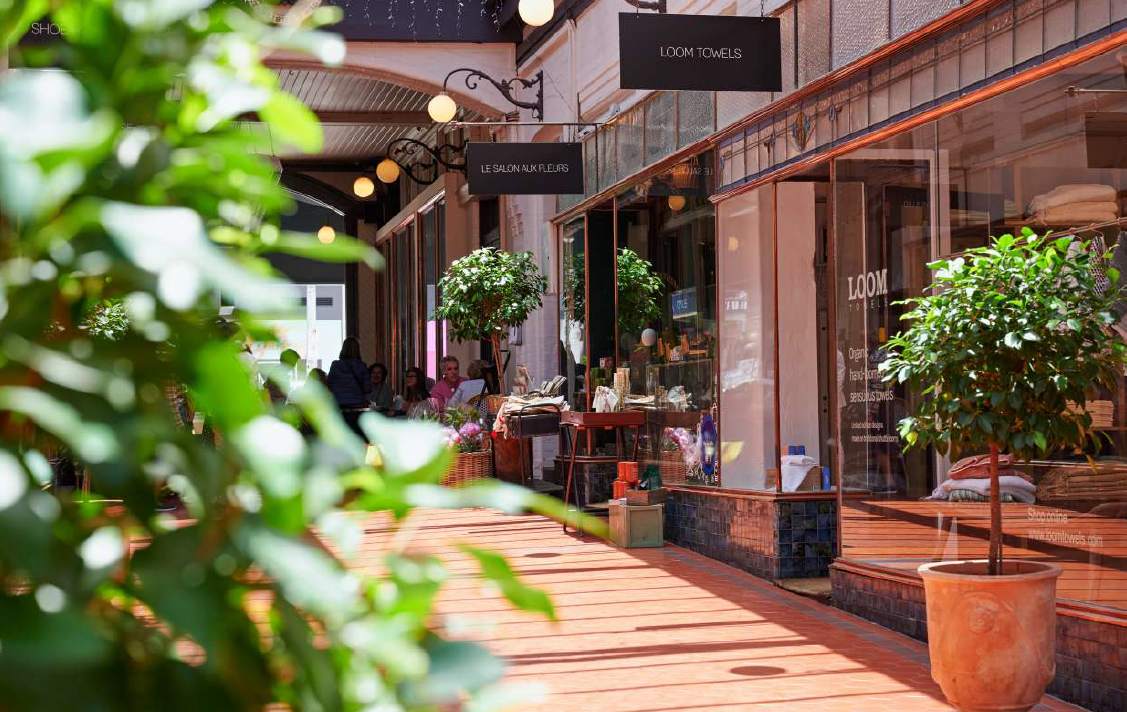
There’s a sense of elegance and sophistication strolling along the boutiques in Armadale. Unlike many shopping strips which have been given over to fast food and nail salons, High Street must have one of the highest ratios of top-end fashion boutiques in Melbourne. This excellent standard of retail offering continues in the historic Kings Arcade, with bespoke shoes, homewares stores and cafes and dining. The calibre of retail is reflected in the many fine homes found in the wide and leafy streets of Armadale – from Victorian to mid-century 1950s and ‘60s architecture through to fine contemporary dwellings.
The work of a number of Melbourne’s most significant architects can be found in Armadale – a who’s who of the architecture fraternity – with names such as Sir Roy Grounds, responsible for designing the National Gallery of Victoria (NGV International) and Robin Boyd, to others such as Harrold Desbrowe-Annear, who made his indelible mark in the early part of the 20th century.
One can also enjoy seeing the work of some of Melbourne’s leading contemporary architects such as Robert Simeoni along with houses designed by B.E. Architecture. Some of these names may be familiar while others such as architect Sol Sapir, who designed several houses and apartments in Armadale in the 1960s and ‘70s and through to the new millennium, are perhaps less well known.
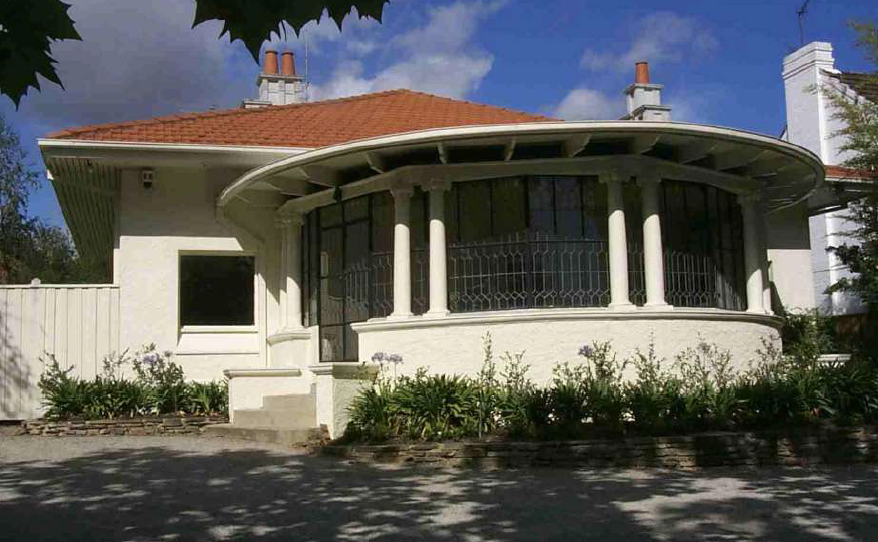
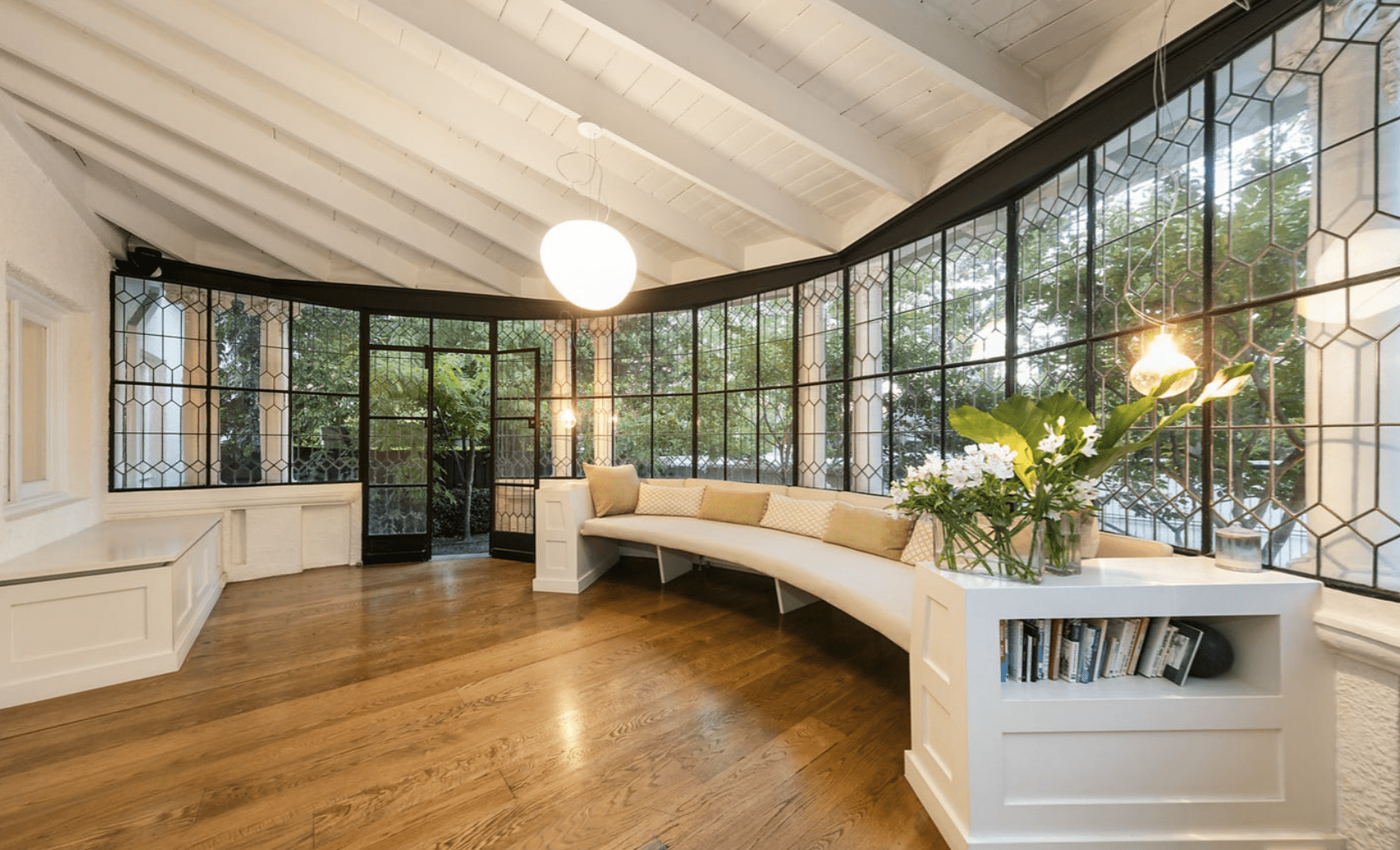
From behind the wheel of a car, it can be difficult to appreciate the rich architectural legacy found in Armadale. So, after a stroll along the High Street, perhaps take the time to walk in some of the neighbourhood’s streets – pause, take in the architecture then slowly move onto discover another architectural gem. Perhaps take a look at these homes and apartments in the mix. But before you leave, it’s worth heading into Kings Arcade. Built in 1893, in the Gothic style, the heritage-listed arcade, designed by Frederick Philips, offers great charm – not surprisingly the chairs and tables used for dining are always full. As you are nearby, take the time to appreciate the work of Harold Desbrowe-Annear – considered to be one of the first modernist architects. Designed in 1922, the property known as ‘Sallman House’ is located at 104 Kooyong Road. The home’s front porch, framed by leadlight windows, must be a continual drawcard for the owners to enjoy the afternoon north-west sunlight.
While you’re in this part of Armadale, take the time to visit 2 Horsburgh Grove (just off Kooyong Road. Known as the ‘Glenunga Flats’, circa 1940, and designed by architect Frederick Romberg and Mary Turner Shaw, these modernist flats offered a more textured and softer approach than many of the Art Deco dwellings built around the same time. A striking blade wall, made from Castlemaine stone, features on the front façade. And if you are keen to see other apartments designed by Romberg, you may need to jump in the car and head to the south-west corner of Clendon and Malvern roads (the other side of the road is Toorak). Also completed in 1940, these apartments, although modest in scale, show the architect’s interest in geometric forms. Architects such as Sol Sapir may not be as well-known as architects Harrold Desbrowe-Annear, Robin Boyd and Sir Roy Grounds, but those in the know, particularly in architectural circles, are aware of his work. There’s an impressive single-level brown brick house at 1A Avalon Road, leading from Kooyong Road. Designed in the late 1960s, the low-slung house features a distinctive brick fence with a circular entrance.
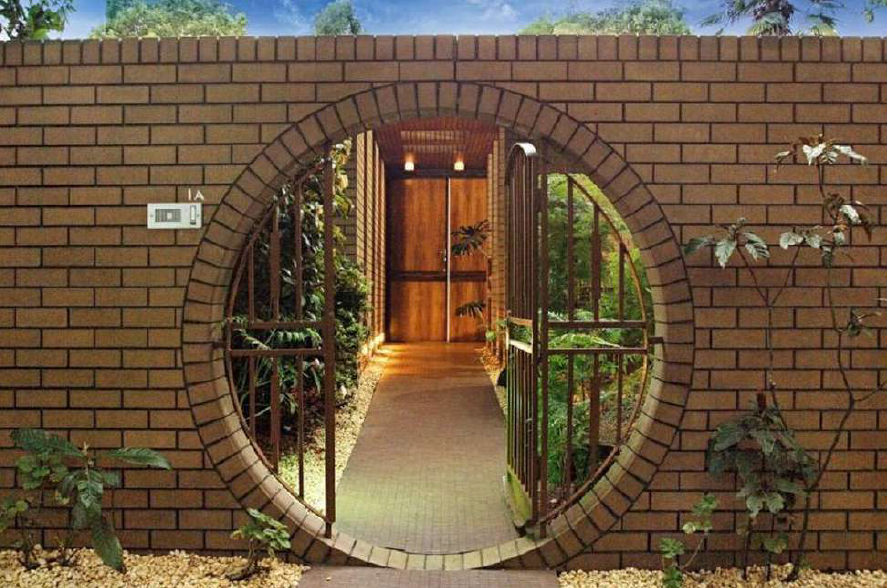
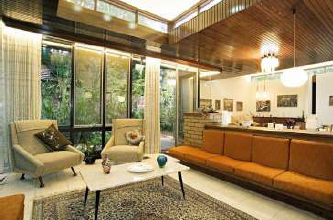
While this period of architecture has often been overlooked, it’s now eagerly sought by young professionals and families who didn’t experience the era first time round. These types of homes also lend themselves to contemporary furniture that sits perfectly on thick Flokati rugs. And to ‘soften’ the exposed brick walls inside, there’s always a macrame wall hanging, also experiencing a revival.
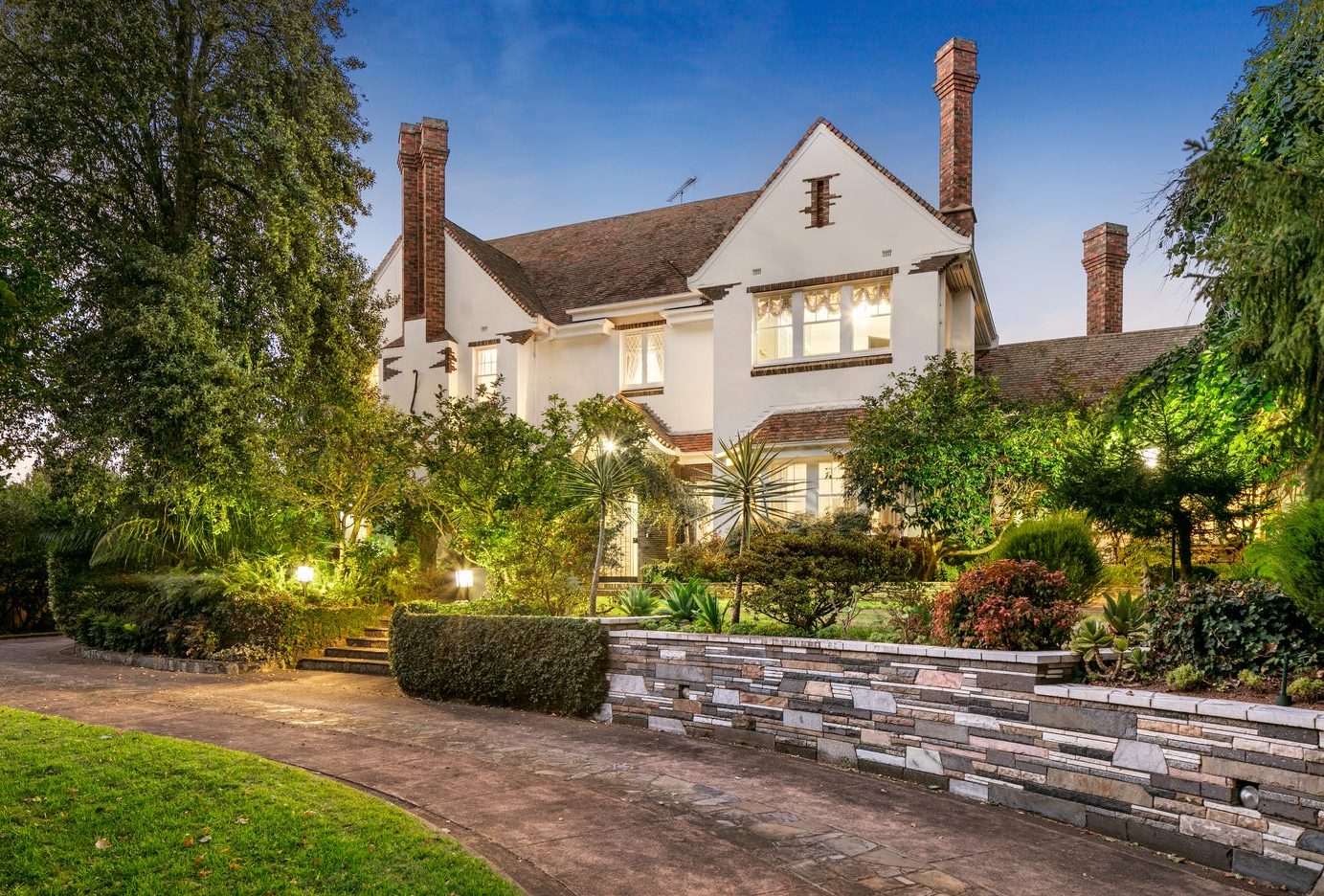
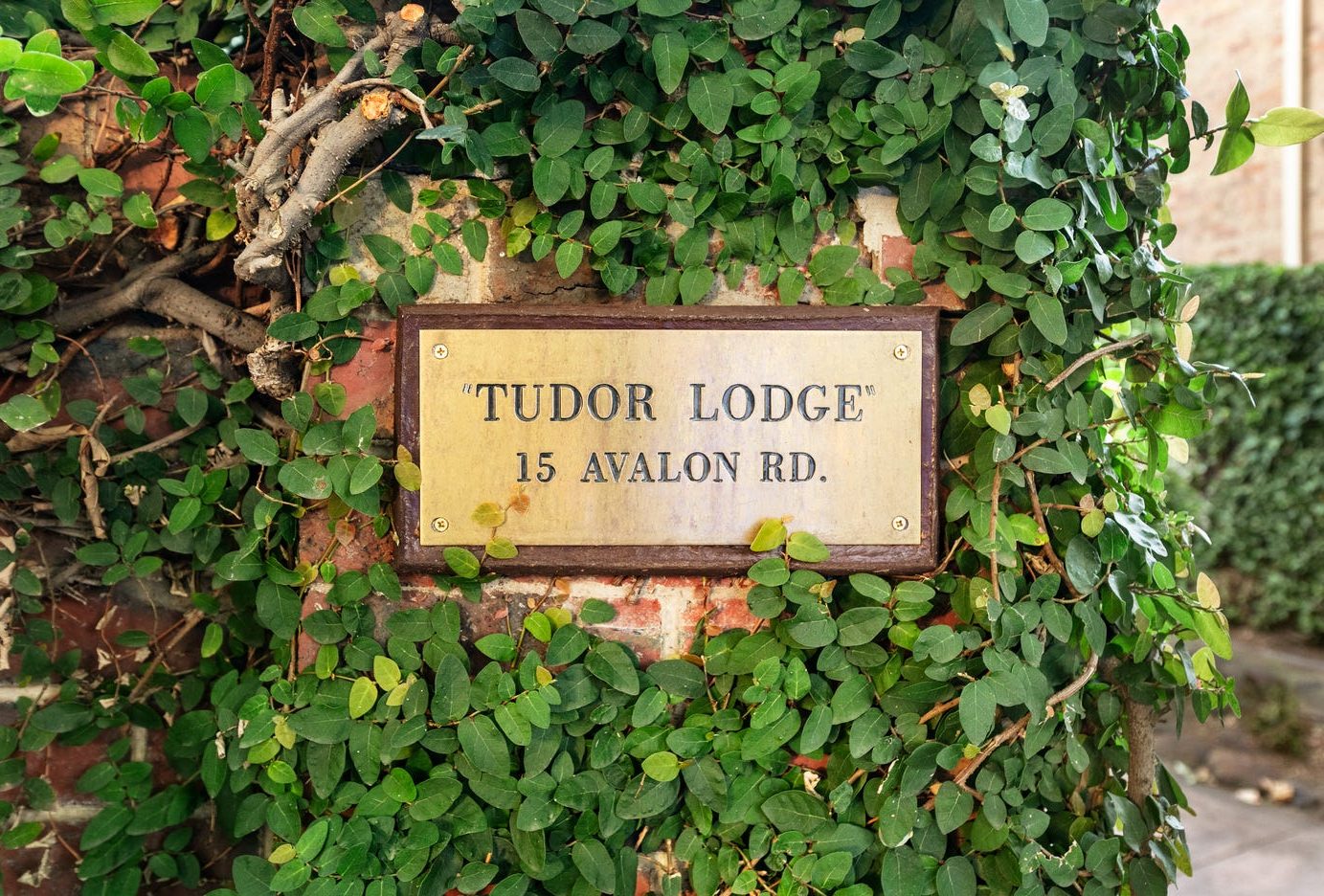
Armadale also has a number of fine period homes from the 1920s and ‘30s, with many of these coming up to 100 years old. Some of these houses, such as Ken-Aitsa, a large Tudor-style lodge, designed by Arnaud E Wright in 1933 and located at 13-15 Avalon Road, features a pitched terracotta shingle roof and tall brick chimneys with corbelled crowns. Set in a botanic garden setting, this grand home reflects the prosperity of Armadale, with the large established plane trees in the wide curvaceous street. Driving through the home’s impressive front gates would certainly be a rarefied experience for both the owners as well as their family and friends.
However, while Armadale features significant 19th and 20th century architecture, it’s also well endowed with many fine contemporary homes. B.E Architecture designed a house that sits on the bend of Hampden Road, wide and leafy street that is considered to be one of Armadale’s finest boulevards. Referred to as a ‘granite’ palace, the two-level house, with basement car parking, appears to have been chiselled out of its site. Architect Robert Simeoni, one of Melbourne’s leading contemporary architects, also made an indelible mark with his concrete brutalist-style house at 27 Adelaide Street. This modernist palazzo, constructed in concrete with fine steel windows, is certainly monumental. Years in the making, this house is testimony to the phrase that ‘it’s worth waiting for great things.’
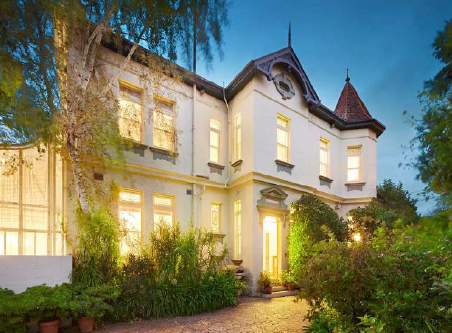
Whether it’s a Victorian house or a less well-known style, such as Wykeham Lodge, at 2B Erskine Street, circa 1891 in the Queen Anne Revival Style and located on the south-west corner of Malvern Road, Armadale is an architectural ‘feast’. While some of these homes demand attention, others sit quietly behind high brick fences – unknown to those strolling past or driving past. Sometimes, it’s these high fences or, equally, the restrained facades that conceal many sumptuous interiors – from the rich and layered of Victorian homes to the extremely pared back of more recent times. Take the time to explore the street of Armadale and enjoy making your own discoveries.